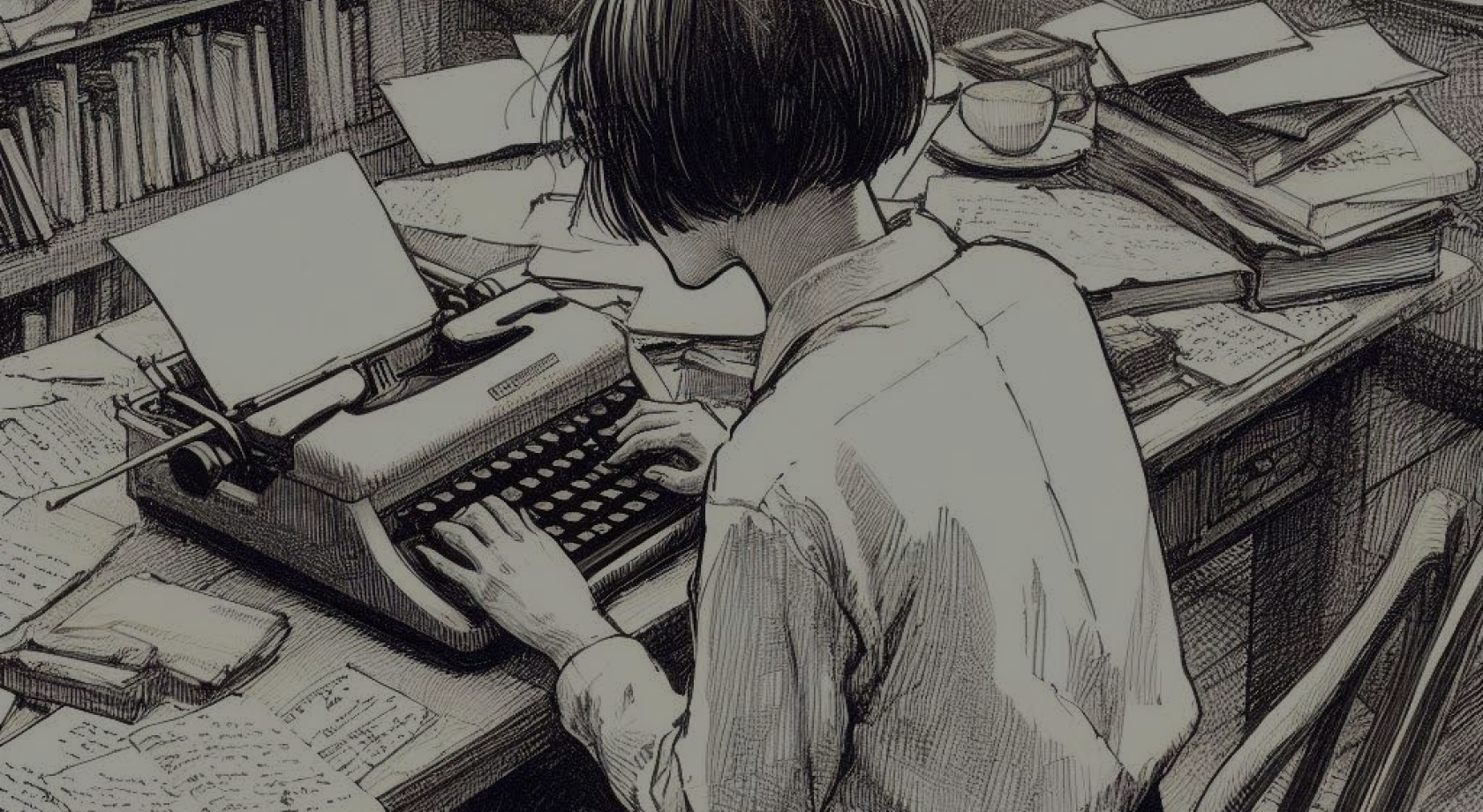

The Child and His Bed of Leaves (Tales of Taquiti 4)
In this fourth chapter of the Tales of Taquiti, Játáti is distraught when he hears his newborn son speaking languages unknown to his people. Read more of this surprising story in this chapter.
If you’d like to read the first chapter before continuing with this story, please click here.
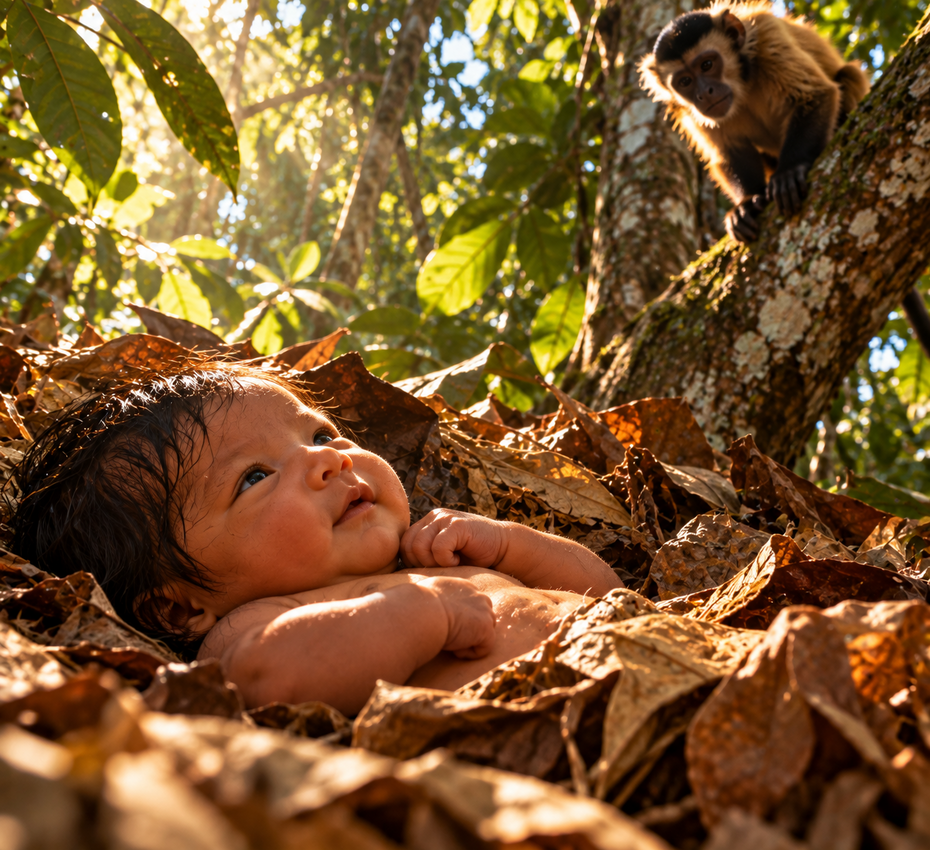
The indian baby and his bed of leaves (created by chatGPT)
The relentless rain of the past few days had left Takwyiti feeling melancholy. And the memories of her grandmother Játáti’s hard life did nothing to lift her spirits. Now she regretted having started to tell that story to the children, but they were so fascinated by the tale that they would hardly accept a watered-down version in its place. So that night, when the children settled into bed and asked Nhá Taquiti to pick up the story where she’d left off, she had no choice but to continue:
“Opinions in the village were divided. The shaman, annoyed by so many rumors, insisted that there was nothing extraordinary about the child Játáti was carrying in her womb. After all, supernatural powers were the privilege of shamans, not of children who hadn’t even been born yet. The women, however, had a different opinion. Gathered in small groups, they whispered incessantly about the mysterious escapades of Játáti’s child, who, it was said, would leave his mother’s womb, transform into an animal, and go for a stroll through the woods, returning only when he felt like sleeping. And then there was that belly, which was growing far too quickly—far beyond what the older women considered normal...
Oblivious to the discussions she provoked, Játáti was tormented by a fear of the unknown. Growing increasingly withdrawn, she distanced herself from her companions and spent long hours alone in her hammock, overcome by bouts of crying that even she could not explain. But what distressed her most were not the strange transformations attributed to her child, nor even the possibility that she might be carrying a creature unlike any other. It was the fear that, once that astonishing child was born, she and her child would be excluded from the community’s daily life—that they would end up becoming strangers among their own people. All Játáti wanted was to have a normal child, one who could grow up and play with the other children in the village!
Wherever she went, Játáti was followed by Rorê, who moved through the treetops, out of her sight. He could see that she was distressed, but he didn’t know why. So he watched over her safety 24 hours a day. But on the day she decided to take a long, solitary walk toward the riverbank to clear her head, things didn’t go as expected. After a few hours wandering through the woods, Játáti began to feel the pains of labor. She then prepared a pile of dry leaves in the shade of a samaúma tree and squatted down to give birth. As soon as the child was born, a deafening wail began that caused the entire forest around them to fall silent. Játáti then lay down on the leaves and closed her eyes to rest a little and calm her nerves. She was almost dozing off when she began to hear voices speaking in an unknown language. When these voices turned into whispers, she finally emerged from the daze she had fallen into, but all she saw was her son lying beside her.
“What will the others do when they find out I’ve given birth to a child who speaks a language no one understands?” I’ll end up being driven out of the village! How is anyone supposed to survive alone in the forest? It would be like being abandoned in a jaguar’s lair...” she cried out to the animals of the forest, as tears streamed down her face.
Seized by panic, Játáti began to cover her son with the leaves from the bed where she had just given birth. One by one, she piled them onto the baby’s frail body until he finally disappeared beneath the foliage. But that still wasn’t enough! With trembling hands and a racing heart, she continued piling on leaves, pressing them down with her hands, terrified at the thought that a sound might escape from that little mound and reach someone’s ears.
From high up in the samaúma’s canopy, Rorê watched it all, fluttering and letting out shrill cries. When Játáti realized that the leaves had stopped moving and that no sound was escaping from beneath them, she stood up and set off back home. She was already halfway there when she came across a group of women running and screaming in the opposite direction. They were following Rorê, who was leaping from branch to branch, coming down from time to time to wait for them, as if to make sure they wouldn’t lose sight of him. Too exhausted to call out to her friends and unable to understand what was happening, Játáti kept walking. At that moment, she wanted only one thing: for the day to end.”
“Nhá Taquiti, that’s not a story for children. “They’ll end up having nightmares,” said Clara and Mateus’s mother, who was passing by the bedroom door just as Taquiti began telling the story of Játáti’s childbirth and nervous breakdown. “They still believe in the stork! Now let’s turn off the light—it’s way past their bedtime—and you should head back to the village.”
Voltar