
Játáti Discovers the Paradise (Tales of Taquiti 2)
In this chapter of a story set in a Timbira indigenous village located on the middle reaches of the Tocantins River (Amazon), the indigenous nanny tells the white children about the stage in her grandmother Játáti’s life when she becomes an adult and finds her soulmate.
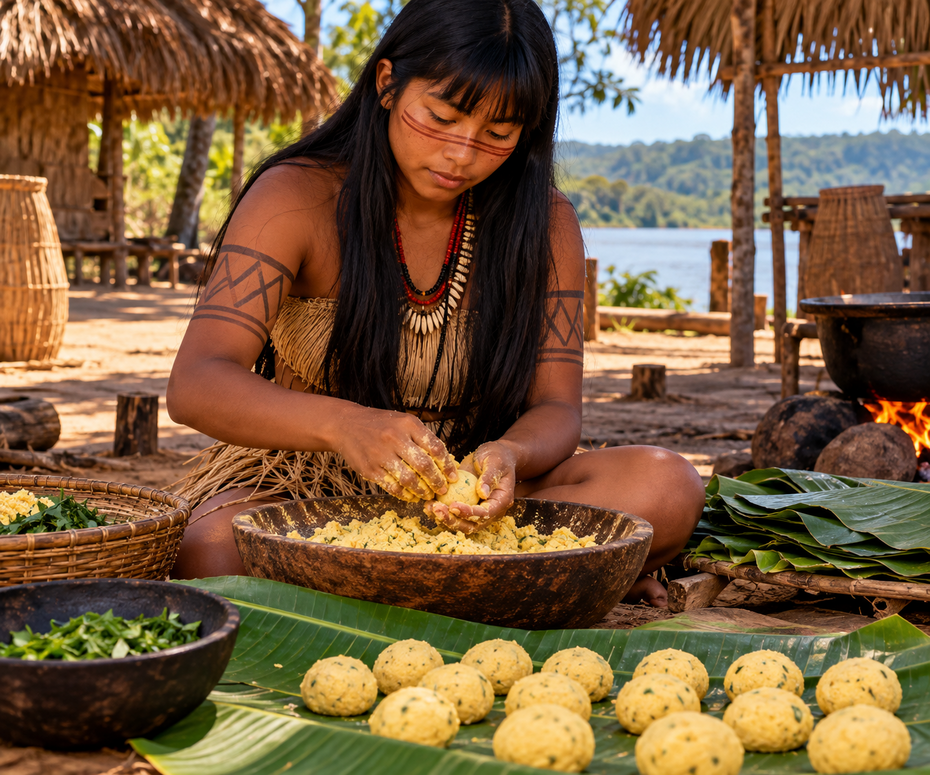
Timbira indian preparing paparutos (Illustration by chatGPT)
“Lie down now, my little ones, so I can start telling the story. Where did we stop yesterday?” asked the Indigenous nanny of the two white children she had been caring for since they were born.
“Nhá Taquiti told us about Játáti and Rore’s childhood.”
“Being a child is nice, isn’t it? But everyone’s childhood ends one day.” Even you two will grow up someday. And when you become important, you won’t remember Nhá Taquiti anymore,” said the old Indian woman with a bitter smile on her face. “Játáti grew up too, but unlike white people, she never amassed wealth or gained importance...
“Játáti wasn’t the prettiest Indian woman in the tribe, but she was by far the most popular with the opposite sex. She always had a smile on her face and a kind word for anyone who wanted to talk to her, whether human or animal. Everyone in the tribe believed that Játáti spoke monkey language, because every night she would tell long stories to Rore until the two of them finally fell asleep. Besides, that mischievous monkey always seemed to understand her commands.
Although the young men of the village were constantly chasing after her like flies around honey, it was the scrawniest young man who won her heart. His name was Arú, better known in the tribe as “the one who daydreams.” While the other young men spent their time fighting, hunting, or fishing, he would simply venture deep into the woods and follow the trail of an animal or the song of birds for hours on end.
Arú was far from being the tribe’s best at hunting and fishing, since he didn’t like to kill animals—not even for food—something no one understood. But Játáti wasn’t much of a cook when it came to making paparuto either… Those two were nothing like the rest! It felt as though they’d fallen from the sky!
Paparuto were the boys’ favorite dish, just as French fries are for you, my -kra. That’s why the young women of the village competed for the reputation of being the one who made the tastiest dumplings. Játáti always began preparing the dumplings with great zeal. She would grate the cassava and squeeze the dough in the tipiti to remove all the excess liquid. Then she would spread the slightly dried cassava paste over banana leaves and cover it with pieces of game meat and another layer of cassava paste. Finally, she would seal the package and place it on a flat, very hot stone, covered with leaves and dirt, to bake.
The problem was that after putting the little bundles out to bake, something would always happen that made her forget about them: either a blue-and-yellow macaw would fly across the sky above the village, or a seven-colored saíra would start singing, and she’d get lost in daydreams, thinking about how beautiful its colorful feathers would look on a new straw bracelet. Her paparutos always ended up baking too long and became inedible! But that didn’t seem to bother Arú, who ate every last one, while the two of them told stories and laughed around the campfire.
One day, Arú moved to the hammock where Játáti and Rore slept. Soon, the tribe began to gossip maliciously that those two seemed to do nothing but talk all night long. Whenever someone pricked up their ears in their direction, they would always hear a fragment of a legend or expressions of wonder at the magic of the universe. The moon was already low in the sky, and most of the village was fast asleep when a keen ear might hear Rore's squeaks: “qui! qui! qui!” He had fallen out of the hammock and was upset at having been expelled from that paradise of warmth and coziness. At that moment, the couple needed a little privacy...”
- Now let’s go to sleep—tomorrow is another day.