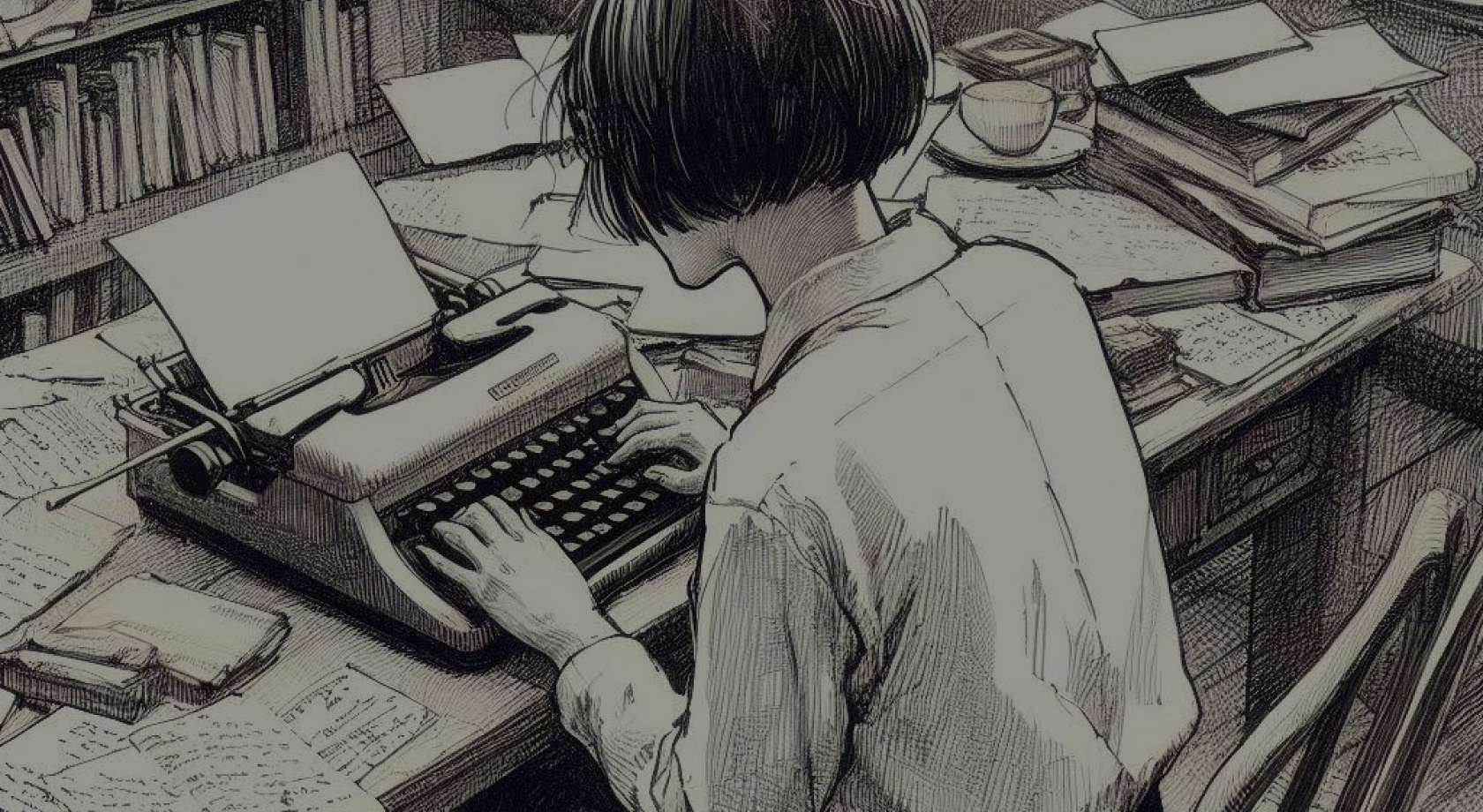

How is a dictator born?
I’m not talking here about a long and unbearably painful labor, but rather about his family. Is it possible for a dictator to grow up in a normal family—like a rotten apple in a basket? Or must he have a family history that differs from that of most people? Family certainly isn’t everything when it comes to shaping a person’s character, but it does have a significant influence, doesn’t it? An analysis of Hitler’s lineage shows how a family with a history of excessive violence can have catastrophic consequences for society.
The version of Adolf Hitler’s family history currently considered the most reliable—from the mystery surrounding his grandfather’s identity to Adolf’s rebellious and extravagant youth in Vienna—is summarized below. If you’re not the type who likes the “in-betweens” and prefer to skip straight to the “conclusions,” please go directly to the section called "A Childhood Marked by Extreme Violence".
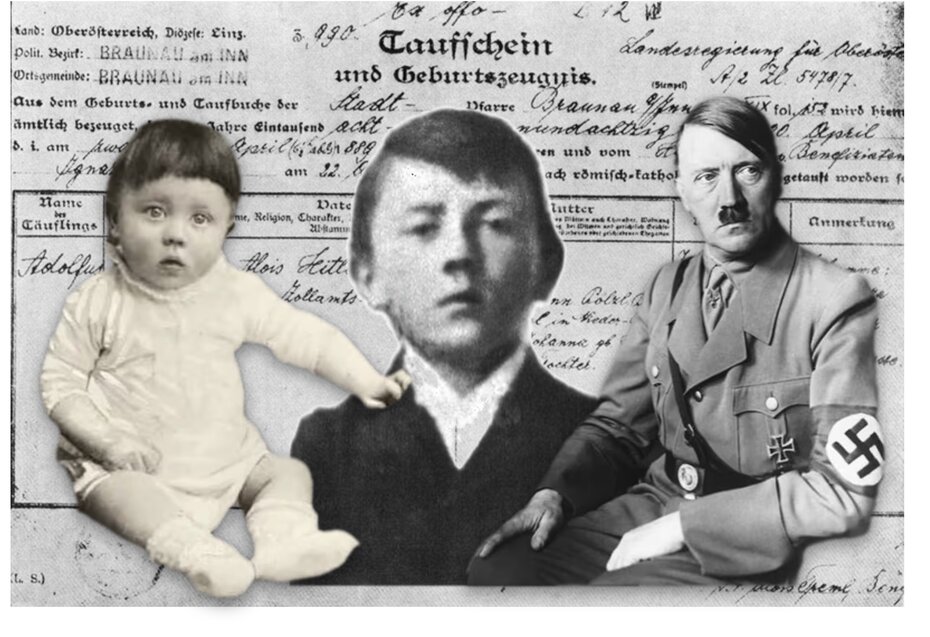
Adolf Hitler's photos from three different phases of his life
The Roots of Trauma: Illegitimacy, Violence, and Women Without a Voice
The story begins with the death of Martin Hiedler in 1829, when his two sons had to decide what to do with the modest farm where they lived in the Waldviertel region of Austria. At that time, it was customary to leave the entire inheritance to the eldest son, in order to prevent small rural properties from going bankrupt. However, Johann Georg, the eldest son, chose to work as a miller and adopt a nomadic lifestyle, leaving his younger brother, Johann Nepomuk, in charge of the farm. A few months later, Nepomuk married Eva Maria Decker, a woman 14 years his senior who belonged to a well-established farming family in the village of Thaures. With the dowry and resources she brought to the marriage, Johann Nepomuk was able to invest in improvements to his farm and acquire neighboring plots, eventually becoming a prosperous and respected farmer.
In the years that followed, the couple had three daughters: Johanna, Walburga, and Josefa. The girls were still young when Johann Nepomuk had an extramarital affair with Maria Anna Schicklgruber, a peasant woman who worked as a traveling maid, assisting with household chores on farms in the region. From this relationship, a son was born, Alois, who was registered only under his mother’s last name in order to protect his father’s reputation and marriage. Unable to provide a home for their son, Maria Anna and Alois were taken in by a family of farmers who lived nearby—the Trummelschlagers—with whom they lived during Alois’s early years.
When Alois turned five, his mother married Johann Georg, Johann Nepomuk’s older brother. However, Georg was an unambitious, selfish man with a bad temper, who soon got rid of his stepson by sending the boy to live on his father’s farm. Thus, at the age of ten, he began working as a servant in exchange for room and board. By the age of 13, he was already tired of manual labor on the farm and decided to leave for Vienna, where he would work as a shoemaker’s apprentice. However, Alois was a clever young man and, while still young, would become a civil servant in the Austrian Imperial Customs Service, rising to middle-class status.
In 1873, Alois married Anna Glassl—who was 14 years his senior, ill, and unable to bear children, but from the upper class—purely out of self-interest. Since Anna’s adoptive father was an official with excellent connections in the Austrian Customs Service, he provided Alois with access to influential figures in the civil service, ensuring promotions and the respect of his superiors throughout his career. However, Alois’s repeated extramarital affairs would lead to his separation from Anna seven years later.
Three years later, Alois formalized his relationship with Franziska Matzelsberger, the maid at the boarding house where he had lived as a bachelor. With this wife, he had two children, Alois and Angela Hitler. However, this marriage would last only two years, as Franziska died of tuberculosis shortly after the birth of their second child.
The woman who would become Alois’s third wife was his cousin Klara Pölzl, who had been brought to Vienna to work as a maid and care for Alois and Franziska’s children. Shortly after becoming a widower, Alois decided to formalize his relationship with his cousin Klara; however, since they were blood relatives, they had to obtain a papal dispensation for their marriage to be legally authorized. Even after they were married, Klara continued to call her husband “Uncle Alois” for many years. Six children were born from this marriage; however, four of them died from various causes, leaving only Adolf Hitler and his sister Paula alive.
Throughout their lives, Alois and Johann Nepomuk maintained an active bond despite the distance, and there are records indicating that Nepomuk took immense pride in his son’s success. However, Nepomuk had no legitimate sons or nephews, which threatened the integrity of the fortune he had amassed and the continuity of the Hiedler surname. For this reason, when Alois was 39 years old, his father helped him legally change his surname to Hitler—a phonetic variation of Hiedler—by means of a ruse. Although Alois’s stepfather had already passed away, he was registered as Alois’s biological father, based on the statements of three witnesses who appeared at the notary’s office. As a result, Alois was no longer considered an illegitimate child. Furthermore, when Nepomuk finally died, most of his fortune was left to Alois Hitler, his principal financial heir.
A Childhood Marked by Extreme Violence
Despite his comfortable standard of living and the affection shown by Nepomuk, Alois became an alcoholic, cold, and authoritarian, as well as extremely violent toward his children and wife. Alois’s behavior exceeded the limits of domestic violence accepted at the time. Adolf’s sister would later recount that he was often beaten with leather whips, belts, and wooden sticks, and that on one occasion the beating was so brutal that Adolf lost consciousness and was bedridden for several days, on the verge of death. On the day he told his father that he dreamed of becoming an artist, Alois publicly ridiculed him and began demanding that he pursue a career as a civil servant. The history of severe domestic violence destroyed the mental health of the entire family.
Although Adolf Hitler was only 14 years old when his father died in 1903, he took on the role of head of the household and continued his father’s aggressive behavior, under the pretext of keeping his sister under control. Four years later, when Adolf was 18, his mother died of aggressive breast cancer. During the last months of Klara’s life, she was cared for obsessively by her son, who applied her bandages himself. The doctor who attended to her on her deathbed reported that Adolf had a reaction so violent and desperate that he had never seen anything like it in his 40-year career. This reaction was attributed to the fact that his mother had been his only safe haven during his childhood, protecting him whenever possible from his father’s violence. After the loss of his mother, he decided to sever ties with his hometown and move to Vienna, where he devoted himself to a career as a painter.
The Dandy of Vienna
Despite the myth Adolf created in his book *Mein Kampf*—that he was a destitute artist wandering the streets of Vienna—Hitler received a considerable inheritance from his father. However, since he was very young, the funds were held in trust until he came of age at 24. In the meantime, he and his sister received a monthly orphan’s pension from the government, in addition to 2,000 crowns from their mother’s estate and a generous loan from their aunt Johanna to finance his studies.
The money Adolf received would have allowed him to lead a comfortable student life. However, he opted for an extravagant lifestyle, renting expensive rooms to live in, buying high-quality clothes, and attending the opera constantly. As a result, the money ran out in less than two years. Since he refused to look for a formal job—which he considered beneath him—Hitler was eventually evicted from his room for nonpayment and ended up living in homeless shelters. It was during this period that he began painting postcards and inexpensive watercolors to survive. However, as soon as Adolf got his hands on his father’s money, he moved to Munich and declared himself stateless in order to avoid compulsory military conscription. Adolf detested the Austro-Hungarian Army because of its mix of German, Hungarian, Slavic, Czech, Polish, Italian, and Jewish ethnic groups, which, according to him, made the Austro-Hungarian Empire decadent and weakened by its diversity.
After settling in Munich, he resumed living beyond his means until his inheritance ran out once again. However, when World War I broke out, he voluntarily enlisted in the Bavarian (German) Army, which he considered the true symbol of Germanic strength, purity, and power. Hitler’s embrace of Prussian/Germanic militarism gave him financial stability and a purpose in life.
The Dictator’s Awakening
Because of his father’s violence, Adolf had developed a deep resentment toward traditional authorities in his early years. Furthermore, he was unable to form emotional bonds, exhibiting isolated and fantasizing behavior. Enlisting in the army, however, provided a solution to the traumas caused by his father’s extreme violence: military discipline replaced his father’s tyranny; the violence of war served as a legitimate outlet for the anger repressed during his childhood; and from being a victim of his father, he became the perpetrator of violence.
Scholars of Nazism say that “By creating the Nazi ideal and later assuming the role of Führer, Hitler projected onto Germany the exact structure of his childhood family: an unquestionable patriarchal leader who severely punishes any disobedience and demands total submission from his ‘children.’”
Translated to english by DeepL (free version)
Voltar