
Picasso’s Blunder
Come here real close, and I’ll tell you a secret. I’ve rarely admitted publicly what I’m about to tell you, because every time I’ve done so, I’ve had to endure looks of disbelief and contempt, while a silent scream echoed in my mind: “Ignorant!.” It’s true, I really don’t understand art, but I do know my most basic feelings. And what they tell me is that I don’t like Picasso’s art. There you go, I said it. Now, if you’ll forgive me for such heresy and decide to give me just one more minute of your attention, I’ll explain why.
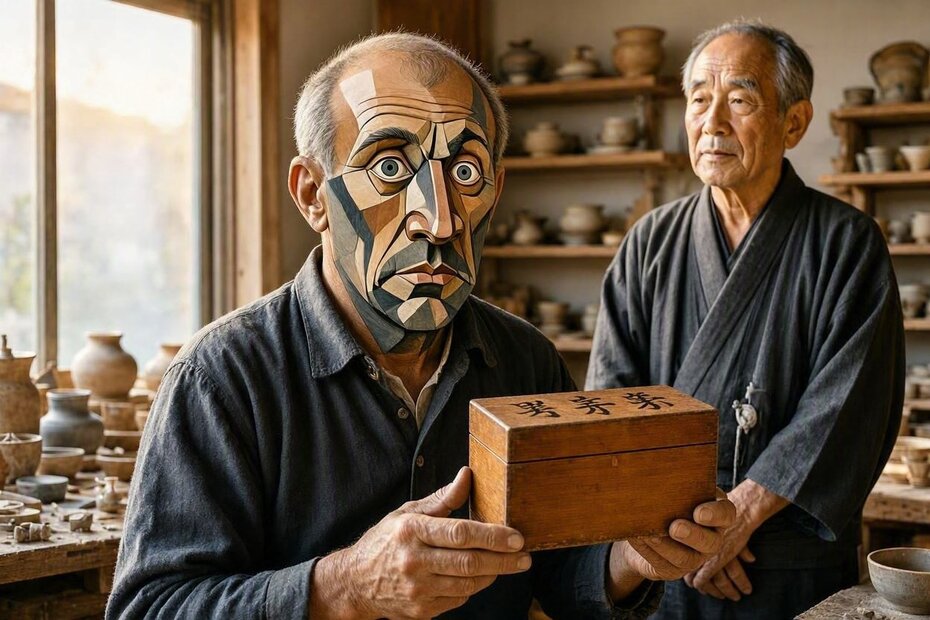
Created by Bing Image Creator
As for the Rose Period and the Blue Period in Picasso’s work, I can still appreciate them. But when I look at his Cubist paintings, I’m overwhelmed by a veritable avalanche of women depicted with distorted features and depressing colors, who look more like victims of an atomic war than the faces of his muses. All I see in his work is the product of a man who hated women—the eternal tantrum of a boy unloved by his mother. It was due to my resentment toward his misogynistic behavior that I discovered, with a secret sense of pleasure, the story of the encounter between Picasso and Rosanjin, a renowned Japanese artist and ceramicist.
In 1954, Rosanjin decided to visit the master Picasso at his ceramics studio in Vallauris, France, bringing one of his works as a gift. Following the Japanese custom of wrapping gifts with great care as a demonstration of the giver’s good intentions and consideration for the recipient, Rosanjin placed his work in a traditional wooden box used to protect valuable ceramics, which he had custom-made and decorated with great care.
When Picasso received the gift, he showed very little interest in its contents, focusing all his attention on the wooden box. Rosanjin could not contain himself and reacted explosively to Picasso’s display of ignorance regarding Japanese art and traditions, shouting, “Not the box, you simple child! What I made is inside!”
That being the case, if you’re an admirer of Picasso’s work—or even display reproductions of his paintings on your living room wall—please forgive me. I know full well that art isn’t obligated to be pleasing to the eye or to possess decorative qualities. I also know that displays of misogyny are in vogue, as police reports clearly demonstrate. I really don’t mean to denigrate Picasso’s image, but this little story is funny, isn’t it?
Translated with DeepL.com (free version)